Climate change is the paramount challenge of our era, with the built environment contributing nearly 40% of global emissions. Addressing this sector is crucial for mitigating climate change and enhancing resilience against extreme events. We are uniquely positioned to reshape the built environment for future generations.
At Arcadis, we actively drive the shift to a low-carbon economy through extensive greenhouse gas reduction initiatives. We continuously redefine our client engagements, products and services to align with a 1.5° world, positively impacting the built environment with lasting effects.

Our Climate Transition Plan (CTP) outlines our commitment to meeting climate goals and promoting a planet-positive future through sustainable project choices. Our CTP includes initiatives such as renewable energy procurement, fleet electrification, sustainable travel policies, and employee commuting programs. Arcadis is also pleased to present an executive summary of our CTP. This summary highlights critical sections of the CTP and provides an accessible narrative for non-technical readers, emphasizing actionable steps, timelines, and measurable outcomes to convey our commitment to addressing climate change.
Our 2025 Carbon Footprint and Net Zero Commitment
As a supporter of the Paris Agreement and Glasgow Accords, Arcadis maintains science-based greenhouse gas (GHG) reduction targets aligned with a 1.5°C pathway and a net-zero commitment. In 2024, our near-term and net-zero targets were validated by the Science Based Targets initiative (SBTi) under the Net-Zero Standard and incorporated into our 2024-2026 strategy.
We are committed to achieving net zero across our value chain by 2035. Our near-term SBTi targets are to reduce absolute scope 1 and 2 GHG emissions by 71% and absolute scope 3 GHG emissions by 45% by 2029, against a 2019 baseline. By the end of 2025, we had achieved a 64% reduction in combined scope 1 and market-based scope 2 emissions and a 4% reduction in scope 3 emissions.
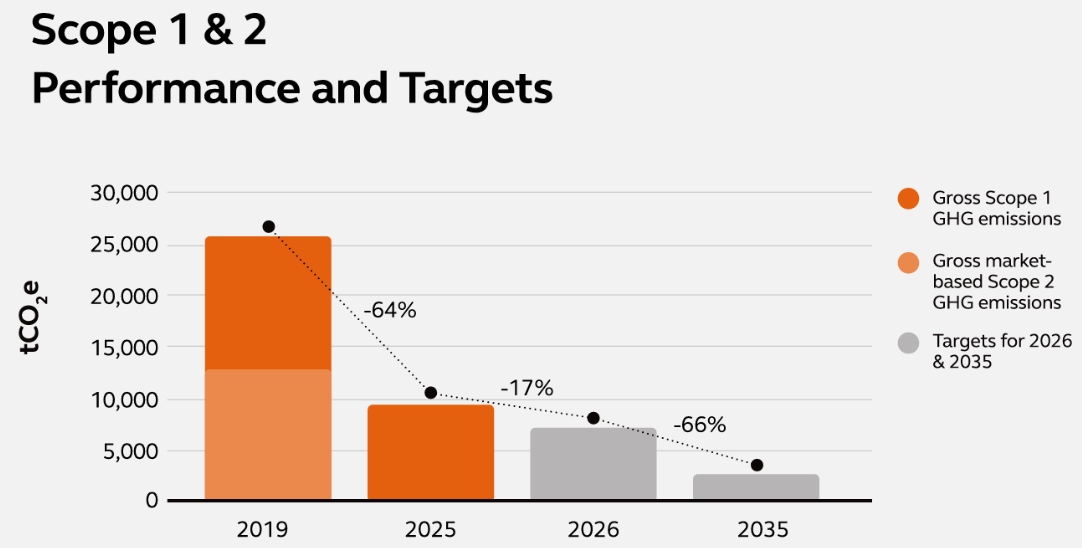
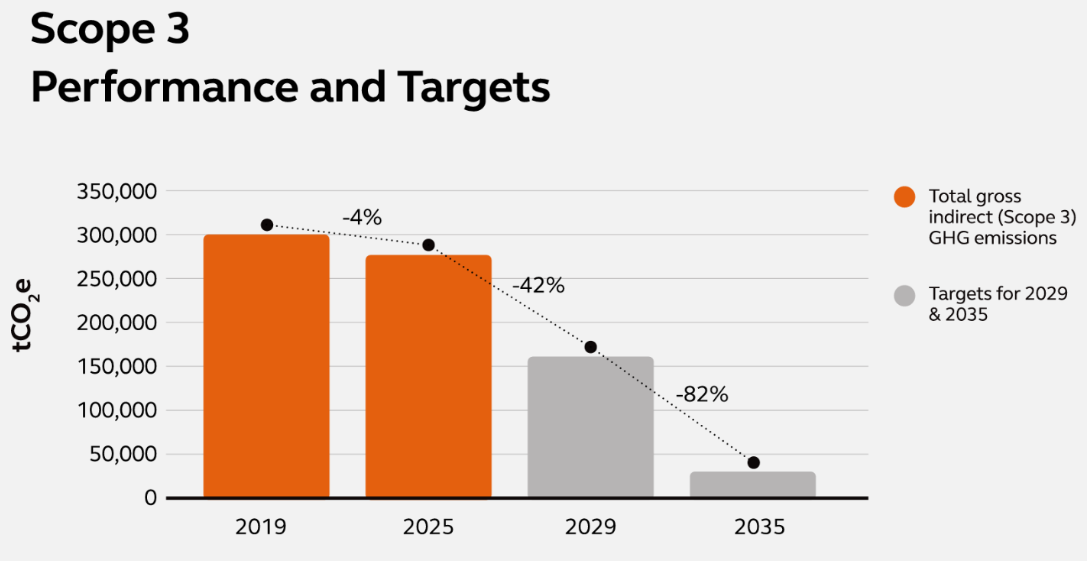
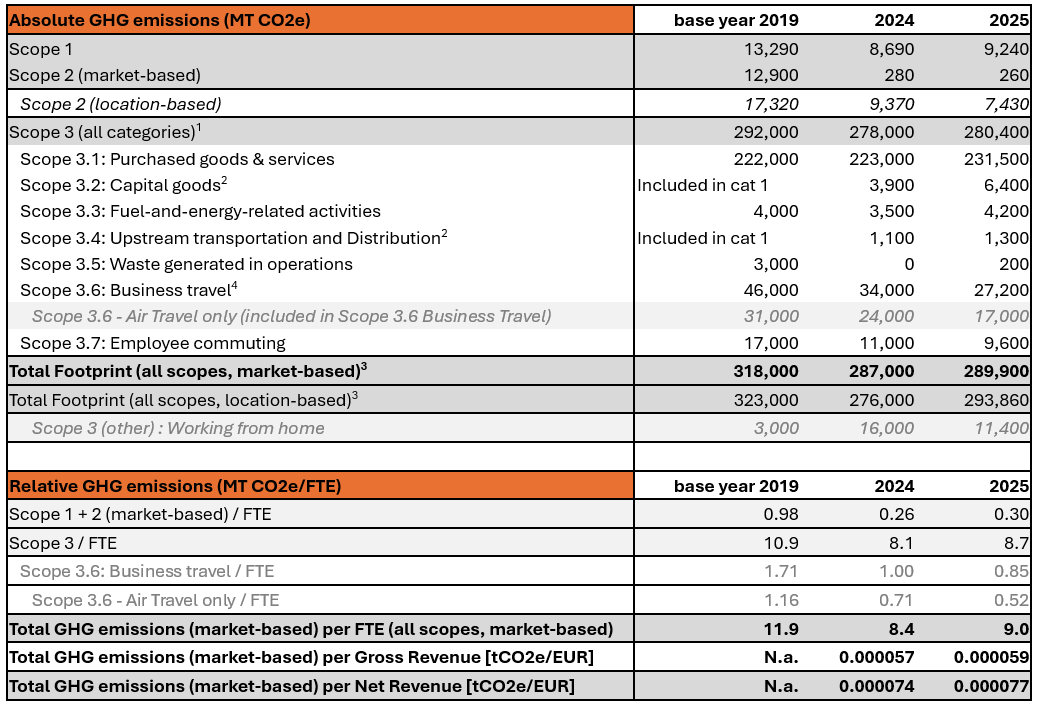
Our total market-based carbon footprint in 2025 was 289,900 tCO₂e, representing an overall reduction of approximately 9% compared with our 2019 baseline. Key contributors to this progress include fleet electrification, office consolidation, renewable electricity procurement, and business travel reduction initiatives. By the end of 2025, 43% of our fleet was electric, while business travel emissions decreased by 21% compared with 2024.
Table 1 : Arcadis Global Carbon Footprint in MT CO2eq (MT = metric tons)
Absolute values are rounded to the nearest 10; and in scope 3 to the nearest 100
1 Scope 3 categories 8-15 are not relevant or not material for Arcadis. Category 15 emissions are excluded as they're not part of Arcadis' target boundary (first reporting year for this category was 2024: 6 tCOe, in 2025 no investments).
2 Capital goods and Upstream transportation and distribution were included within scope 3 category 1 prior to 2024, therefore no comparison can be made between 2019 and 2024.
3 We report work from home (WFH)-related emissions separately from our total GHG emissions to align with the requirement for our SBTi-validated net zero target.
4 Business travel actuals of 2024 were restated with +1,950 tCOeq following additional insights gained after publication.
Purchased goods and services remain the largest contributor to our scope 3 footprint. We continue to improve supplier engagement, strengthen sustainable procurement practices, and enhance emissions data quality as part of our net-zero program.
Carbon Offsets
As an interim step toward our net-zero ambition, Arcadis purchases high-quality carbon credits to compensate for emissions from our operations (scope 1 and 2) and selected scope 3 categories. In 2025, we continued supporting verified nature-based climate projects like the REDD+ forest conservation projects “Los Riscales” in Colombia and “Tambopata” in Peru as well as to a smaller extent a project in Kenya for clean cooking with biogas. While purchasing these carbon credits, these are not deducted from the presented carbon footprint figures, and we maintain our primary focus on reducing emissions across our value chain.
With our net-zero ambition in mind, we are gradually replacing carbon avoidance credits with carbon removal credits to address the remaining 5% to max. 10% of our baseline emissions from our net-zero year on. To achieve that, we have already invested in a reforestation project on which we also actively work together with a project implementation partner in India since several years ago.
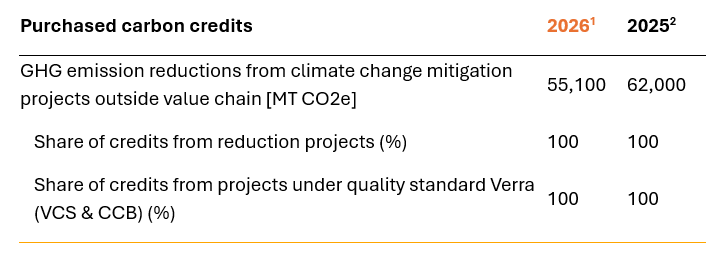
2 Amount of carbon credits cancelled in 2025 for our 2024 emissions
Renewable Energy
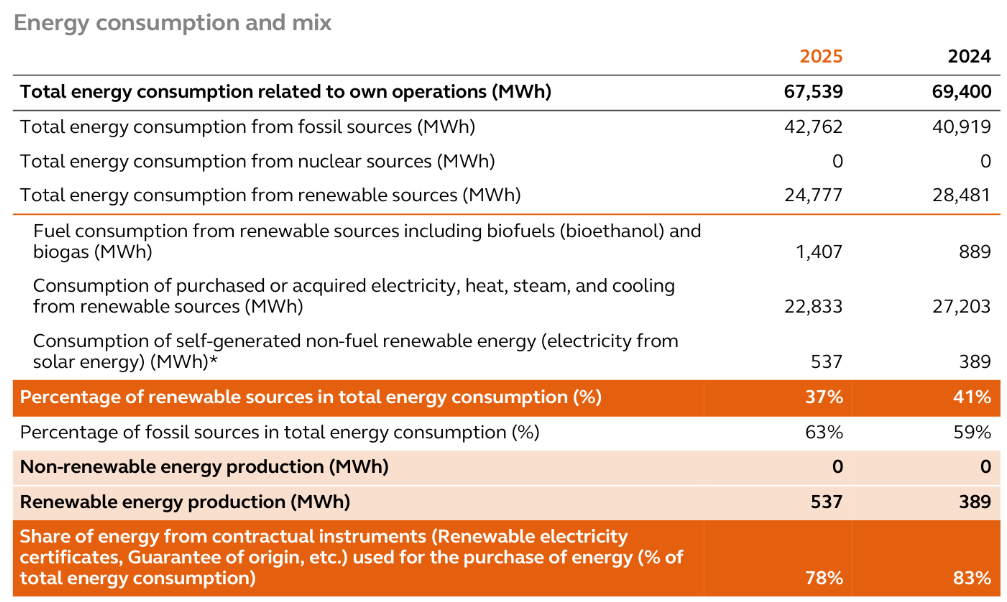
In 2025, Arcadis consumed 67,539 MWh of energy (electricity and fuels), of which 24,777 MWh (37%) came from renewable sources. Renewable energy was sourced through direct renewable electricity contracts, renewable energy certificates, self-generated solar power, and renewable fuels. Arcadis generated 537 MWh of renewable electricity through on-site solar installations during the year.
Paper Consumption
Reducing paper consumption remains an important part of our efforts to improve resource efficiency and promote more sustainable office operations. In 2025, our global offices consumed approximately 59,000 kg of paper, a reduction of nearly 70% compared with 2021. In addition, 81% of paper consumed was sustainably sourced, either certified by the Forest Stewardship Council (FSC) or made from 100% recycled content. We continue to encourage digital ways of working while promoting responsible sourcing for the paper that remains necessary in our operations.
Water Stewardship and Circularity
Beyond climate action, Arcadis has established global Workplace targets to reduce both water consumption and waste generation by 30% by 2028, compared with a 2024 baseline. These targets support our broader ambition to improve resource efficiency, strengthen environmental data quality, and reduce the environmental impact of our office operations.
In 2025, our global offices consumed approximately 626,000 m³ of water and generated approximately 1,298 tons of waste. We continue to improve actual data collection, implement water and waste reduction measures, and promote circular economy principles across our operations.
Our Biodiversity Footprint
Arcadis' biodiversity commitments are aligned with the Global Goal for Nature and the Kunming-Montreal Global Biodiversity Framework. Through our Biodiversity and Ecosystems Policy, we are committed to achieving no net biodiversity loss across all sites by 2030, delivering 10% biodiversity net gain at locations with >20% green space on site by 2030, and compensating for the biodiversity impact of our buildings’ land-use by 2050.
In 2025, we continued assessing the biodiversity footprint and green space. Beyond our own operations, we support clients through biodiversity consulting, ecosystem restoration, environmental impact assessments, and nature-positive design solutions.
* All numbers on this page besides paper consumption, the share of sustainably sourced paper and our waste & water targets, are also published in our annual report 2025 and have received limited assurance, see the assurance report on pages 290-292.
Create a better future with us
